About Onawa LaBelle, PhD

Associate Professor of Psychology, University of Windsor
Director, Positive Psychology, Education, and Recovery Lab (PEARL)
Onawa LaBelle, PhD, is an Associate Professor of Psychology at the University of Windsor and Director of the Positive Psychology, Education and Recovery Lab (PEARL).
Her work applies positive psychological and relational frameworks to the study of addiction recovery, particularly within educational and peer-based contexts. She is especially interested in recovery identity development, belonging, disclosure, collegiate recovery, and recovery-supportive systems within higher education.
Dr. LaBelle earned her Bachelor of Arts in Psychology from Smith College and her master's and PhD in Psychology from the University of Michigan, where she specialized in personality and social psychology. During graduate training, she intentionally pursued additional coursework, mentorship, and research experiences in positive psychology and close relationships, which now form the foundation of her scholarly perspective. Her interdisciplinary approach emphasizes the importance of understanding recovery not only as an individual process, but also as one shaped by relationships, social connections, and opportunities for meaningful participation in community life.
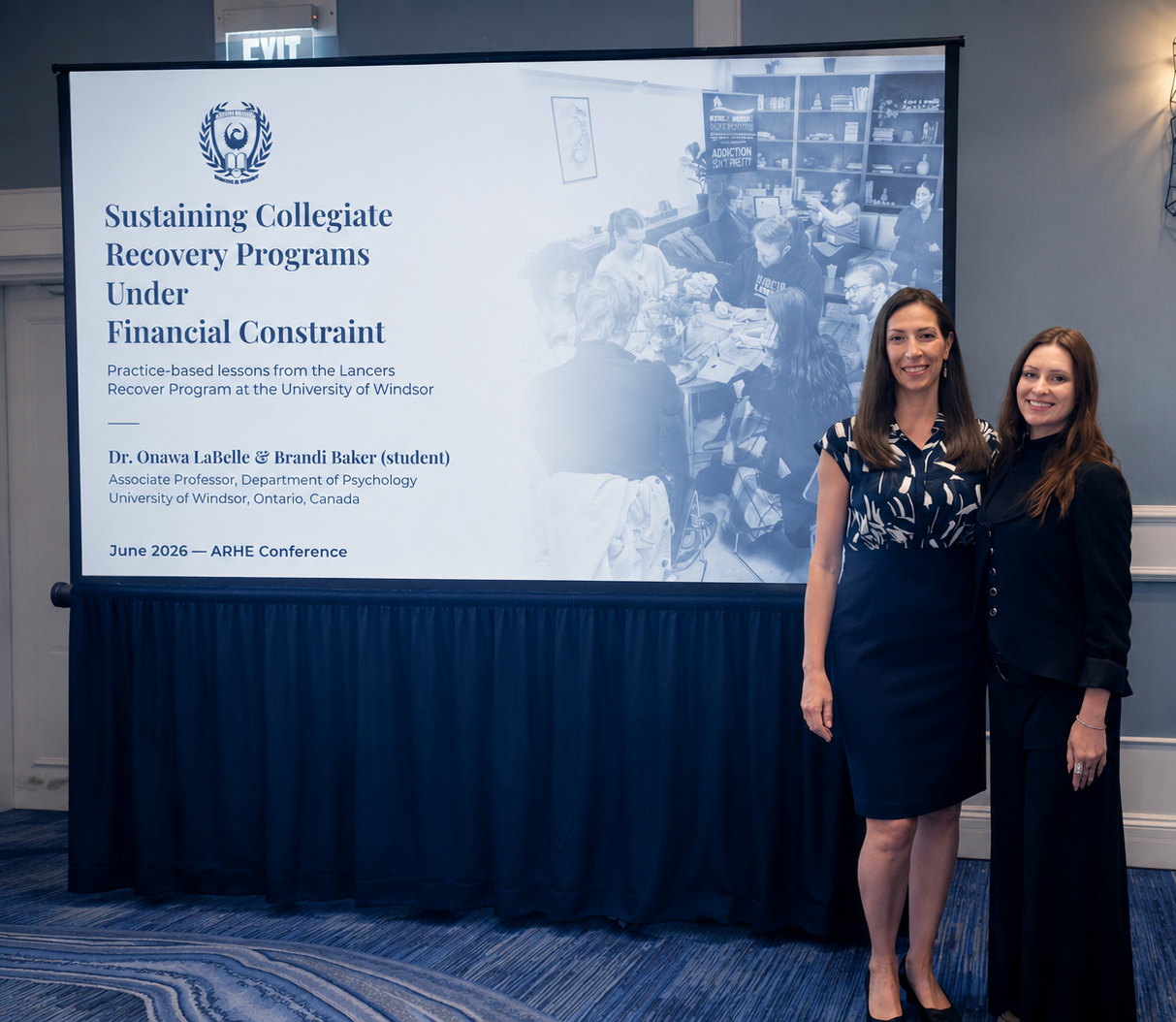
She is the founder and faculty advisor of Lancers Recover, the first collegiate recovery program at a university in Ontario. She previously served as Co-Director of the Center for Addiction Recovery Support (CARS), a national training and technical assistance center funded by the U.S. Substance Abuse and Mental Health Services Administration.
She is also a Collaborating Scientist with the Homewood Research Institute and has served as a Faculty Success Program coach with the National Center for Faculty Development & Diversity, supporting early- and mid-career faculty members in academic productivity, sustainability, and work–life integration.
Her scholarship is informed by both empirical inquiry and lived experience in long-term recovery.

Scholarly Lens

• Personality & Social Contexts
• Positive Psychology
• Relationships
• Recovery Research
Leadership & Impact
• Founder & Faculty Advisor, Lancers Recover
• National Recovery Support Initiatives
• Research & Community Partnerships
• Faculty Development & Mentoring

Research Interests
• Recovery identity development
• Belonging and disclosure
• Collegiate recovery
• Recovery-supportive systems
• Peer recovery support services
• Positive psychological processes in recovery
Research Overview
Recovery often unfolds in the context of disruption — experiences that interrupt education, relationships, identity, and belonging. For students and emerging adults, navigating recovery within academic environments can be especially complex, shaped by institutional structures, peer relationships, and access to recovery-supportive systems.
Dr. LaBelle’s research examines addiction recovery as a lived, relational, and developmental process, with a focus on how recovery unfolds for individuals- especially within educational and institutional contexts. Rather than treating recovery as a clinical outcome or service endpoint, her work centers the psychological and relational processes through which recovery is experienced, sustained, and integrated into identity over time.
Dr. LaBelle’s work is collaborative and interdisciplinary, bridging psychology, education, and community-based recovery research, and is informed by both empirical inquiry and lived experience.

The Positive Psychology, Education, and Recovery (PEARL) Lab
The PEARL Lab applies positive psychological and relational frameworks to the study of addiction recovery in educational and peer-based contexts.
The lab examines how students and emerging adults navigate recovery within academic institutions and how recovery-supportive systems foster belonging, agency, and long-term well-being.
Research Themes
Recovery Identity Development
Exploring how recovery is experienced, understood, and integrated into identity over time.
Collegiate Recovery Programs
Understanding how students navigate recovery within educational systems and communities.
Recovery-Support Systems
Examining how institutions, relationships, and support structures help sustain growth and well-being.
Close Relationships & Recovery
Studying close relationships and recovery communities as pathways for connection and healing.

Why PEARL?
A pearl is formed when a grain of sand enters an oyster's shell—an intrusion that causes irritation, friction, and disruption. Over time, through a slow and layered process, that irritation is transformed.
What begins as something unwanted becomes something valuable, resilient, and enduring.
Recovery is rarely linear, often comfortable, and marked by uncertainly. Through time, care, support, and meaning-making, experiences that once felt painful can become sources of strength, identity, insight, and connection.
PEARL Lab Approach
Lived Experience
• Community knowledge
• Human-centered research
• Lived experience as expertise
Translation Into Practice
• Policy
• Training
• Higher education systems
Positive Psychology
• Strengths
• Growth
• Purpose
Trauma-Informed Practice
• Context
• Care
• Understanding

Work With Us

The PEARL Lab mentors undergraduate and graduate students whose research interests are primarily focused on aspects of addiction recovery. Our work applies positive psychological and relational frameworks within recovery contexts, particularly collegiate recovery, recovery identity development, recovery capital, and peer recovery support services. Students whose primary interests are general well-being, relationships, or positive psychology outside of recovery contexts may find a better fit with other research groups.
We are especially interested in working with students who wish to study:
• Collegiate recovery and student recovery pathways
• Recovery identity and recovery capital
• Peer recovery support services
• Recovery-oriented systems of care
• Trauma-informed and lived-experience-informed recovery
Apply Today (links coming soon!)
-
For students interested in pursuing graduate research and mentorship opportunities within the PEARL Lab’s areas of focus.
Click here ( link to Microsoft Form).
-
For undergraduate students interested in contributing to ongoing research and gaining hands-on experience in recovery-focused scholarship.
Click here ( link to Microsoft Form).
-
For those seeking to become involved with the PEARL Lab and explore opportunities for collaboration, research, and learning.
Click here ( link to Microsoft Form).
Leadership, Media, & Consultations

Leadership & Affiliations
• Founder and Faculty Advisor, Lancers Recover
• Collaborating Scientist, Homewood Research Institute
• Collaborator, Collegiate Recovery Research Collaborative
Past:
• Co-Director, Center for Addiction Recovery Support
• Faculty Success Program Coach, National Center for Faculty Development & Diversity
Speaking & Consultation
Dr. LaBelle provides invited talks, consultation, training, and strategic guidance related to addiction recovery, collegiate recovery programs, peer recovery support services, recovery-supportive educational environments, and lived-experience-informed practice.
Her work has included collaboration with universities, community organizations, national recovery initiatives, and federally funded training and technical assistance efforts.
Areas of consultation and speaking may include:
• Collegiate recovery and student recovery support
• Recovery-supportive campus systems
• Peer recovery support services
• Recovery identity and lived experience
• Trauma-informed and recovery-oriented practice
• Recovery allyship and higher education
-
List / link media here.
-
List / link podcasts here
-
List/link features here
Media & Interviews (coming soon!)
Reference Requests
Dr. LaBelle is willing to provide letters of reference only for students and trainees with whom she has worked closely with and knows well enough to write a strong, detailed letter.
Letters of recommendation require substantial time, preparation, and revision. For this reason, she has a required process and minimum timelines.
Required Timeline
• Minimum three weeks’ notice
• Complete materials submitted at least two weeks before the earliest deadline
Priority is given to students and trainees known well through research supervision, mentorship, or sustained interaction while teaching.
Required Process
Submit the reference request form
Email Dr. LaBelle directly to confirm submission
If Dr. LaBelle has not received and acknowledged the follow-up email, the request may not be processed.

Get in Touch
Meaningful work often begins through conversation. Whether you're reaching out regarding research, collaboration, student opportunities, or speaking and consultation inquiries, I’d be glad to hear from you.